This level features Starscream, the devious Decepticon usurper. His array of abilities includes an unusual combination: cloaking to engage in stealth tactics, as well as flying in jet form. Designing spaces that would work for such disparate gameplay styles simultaneously was a fun challenge to tackle. I worked on this level from paper design all the way to final shipping implementation, including authoring blockout geometry in BSP and scripting all encounters, in-game vignettes, destructibles and much more.
In order to help differentiate Starscream’s stealth engagements from those that occurred much earlier in the campaign, I designed a custom alarm box system. If the player is spotted by enemies, the enemies will use the alarm box to spawn extra turrets as backup. The player can destroy the alarm boxes outright to prevent the alarms from being raised. However, if the player is extra stealthy, they can hack the alarm box and spawn friendly turrets that will take out the enemies.
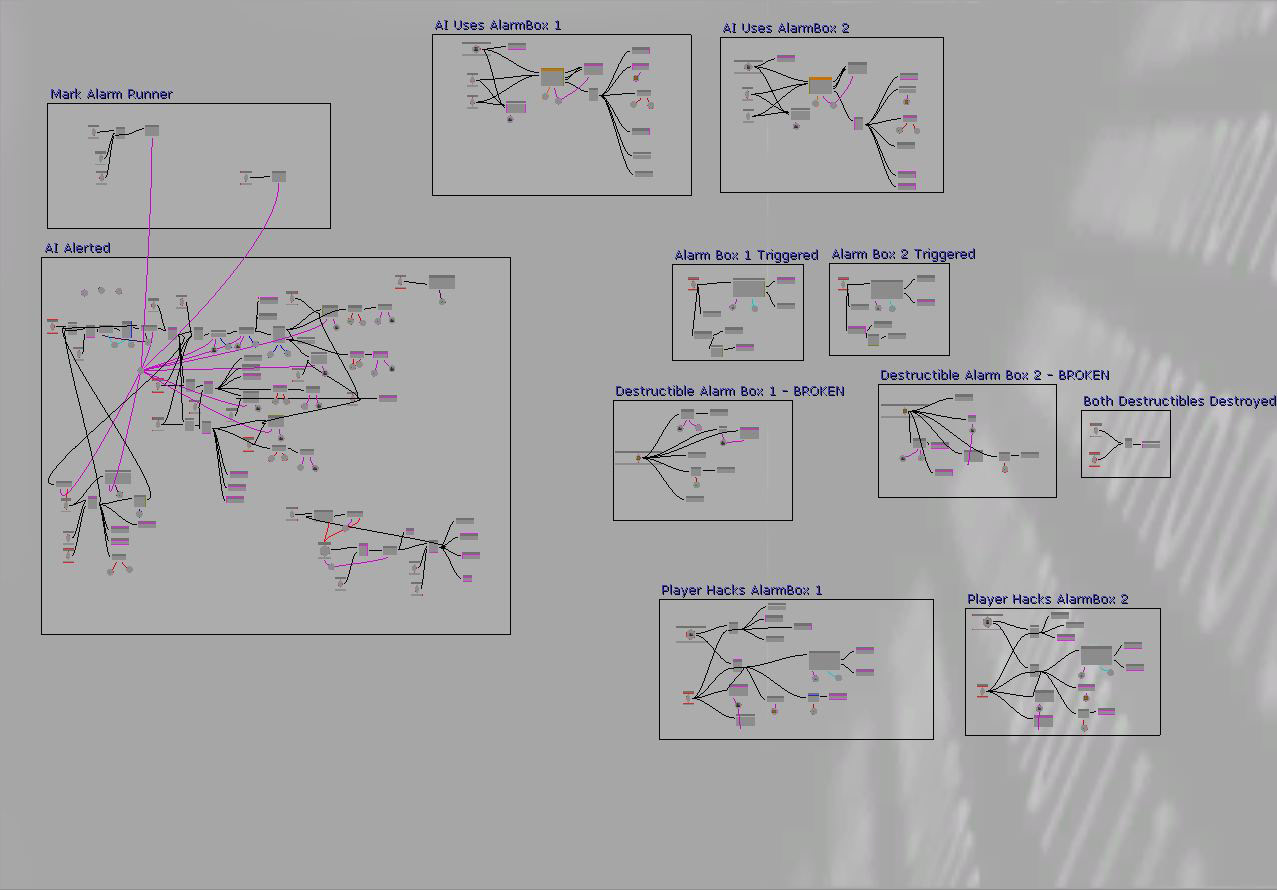
A snippet of the kismet for the Alarm Boxes.
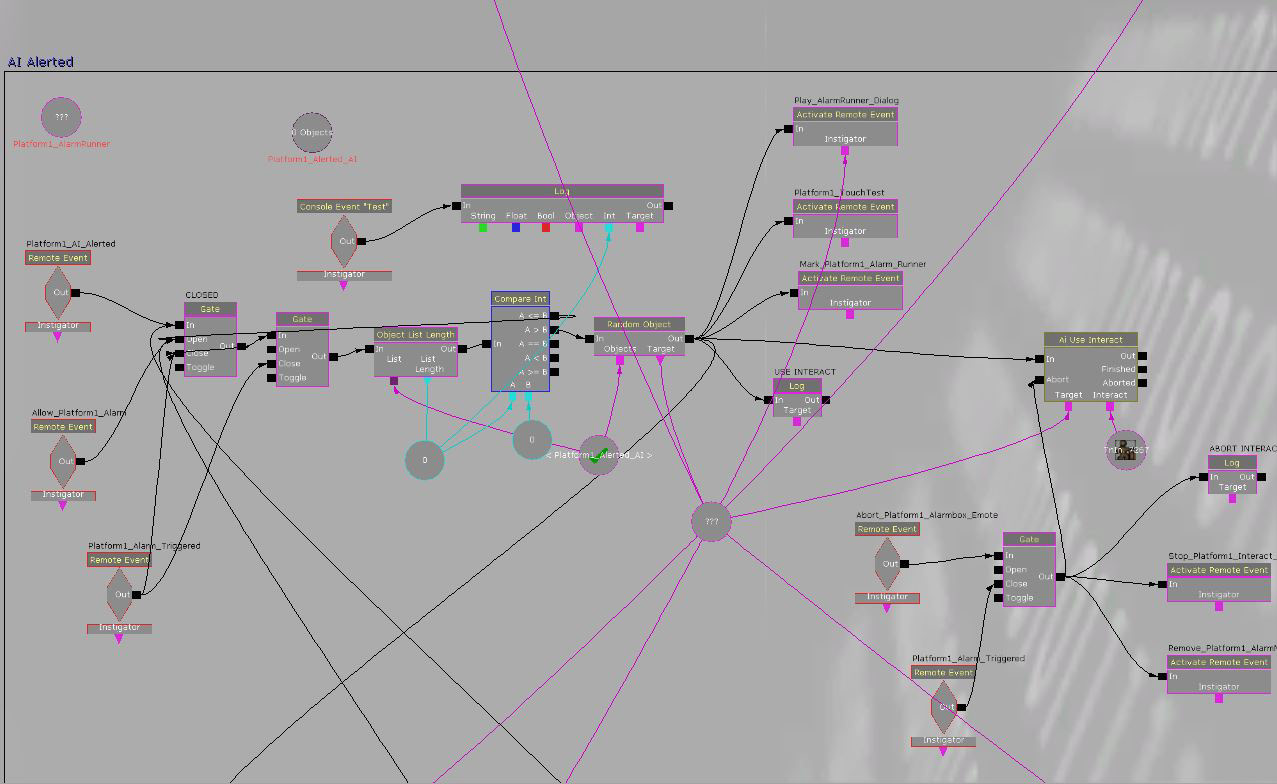
This screenshot represents an in-depth look at the logic that makes AI interact with the alarm boxes. When the AI in one area spots the player, this logic randomly grabs one of the AI and makes them sprint to trip the alarm. Once they reach the alarm box, they play a short animation which gives the player a brief window in which they can kill the AI to prevent the alarm from being raised.
The pivotal narrative moment in this level occurs when Starscream successfully sneaks into Shockwave’s base and eventually frees Grimlock. Working closely with artists, cinematic designers, and animators, we pushed ourselves to integrate some degree of interactivity to keep the player engaged in the thrust of a story-heavy moment.
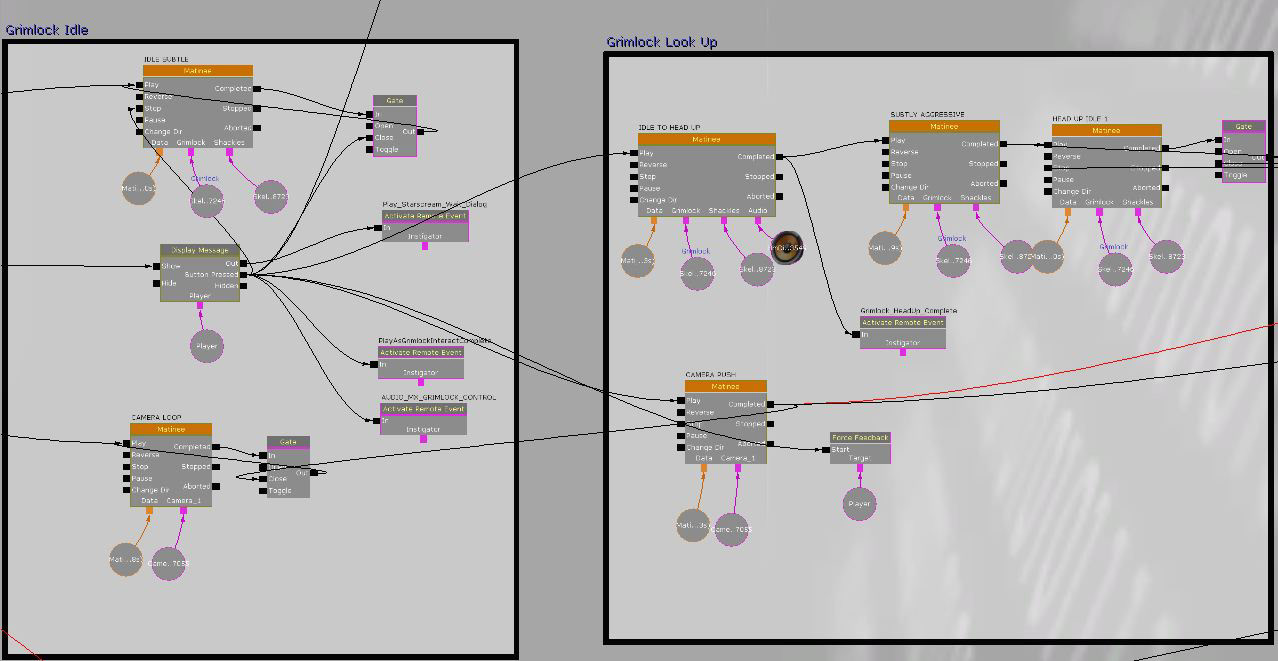
This logic demonstrates part of the implementation of this in-engine cutscene.